Ayutthaya: a royal capital connected to the wider world
Thailand’s former capital rewards a reading that puts kingship beside rivers, commerce and cultural exchange.
The outline of a lost capital
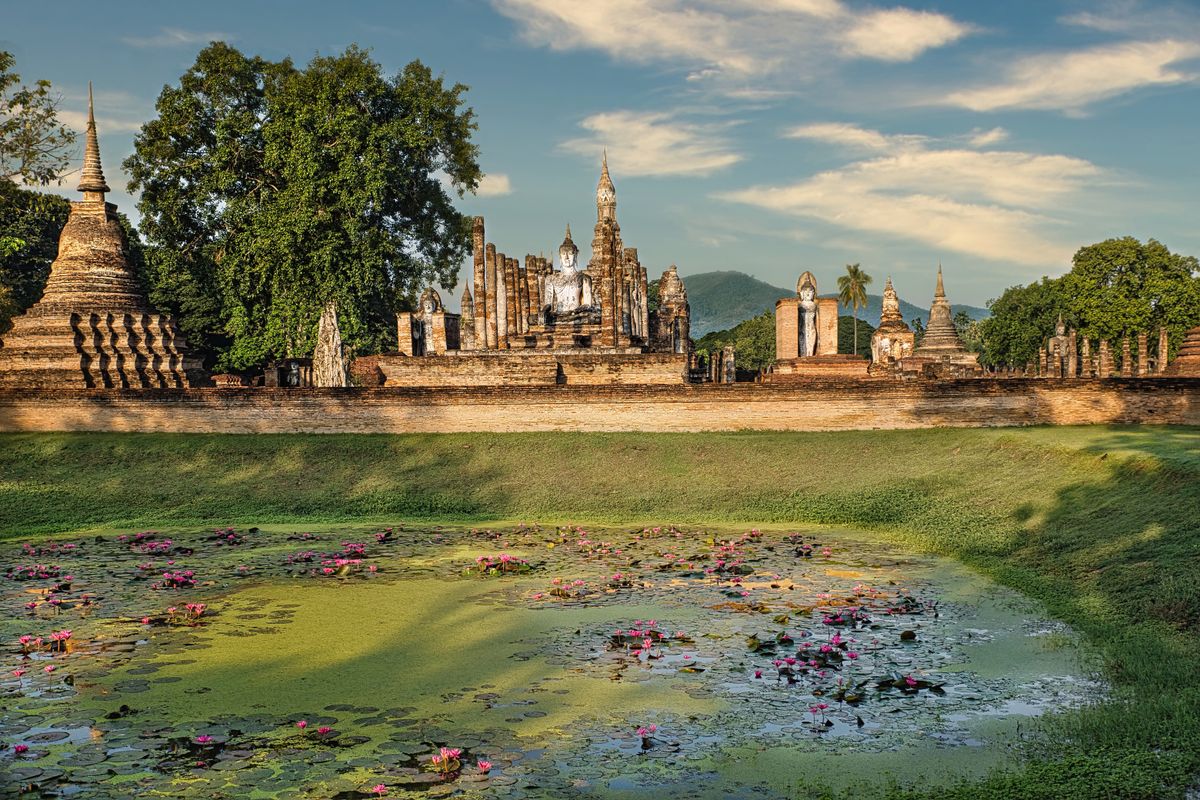
UNESCO describes Ayutthaya as a Siamese capital founded around 1350, a major centre of commerce and diplomacy, and a city destroyed by the Burmese army in 1767. Its surviving towers and monasteries offer evidence of an urban world rather than a single isolated royal residence. These facts provide a clear historical frame for a visit. They also suggest why a royal story should include connections with merchants, visitors and other states. A capital is sustained by exchange and administration as well as ceremony. Starting with that larger frame prevents the ruins from becoming merely a backdrop for a tale of splendour followed by sudden destruction.
Rivers belong to political history
The city’s location among rivers is one of the most useful features to study. Water can shape access, defence, commerce and urban planning, and the heritage account discusses the significance of the site’s position. Look at a map before comparing individual monuments. Ask how people and goods might have moved through the city, then check those questions against reliable historical interpretation. Do not assume that a modern road layout reproduces the earlier experience. The relationship between water and settlement gives royal authority a practical setting: rulers operated within an urban system whose opportunities and constraints came partly from geography.
Exchange can be seen without guessing origins
A cosmopolitan capital may absorb varied artistic influences, but visitors should avoid identifying the origin of every decorative feature from appearance alone. Use labels and scholarly explanations to establish a connection. Record the date and context alongside any stated influence, since styles can travel through several intermediaries rather than arriving in one direct encounter. This approach gives cultural exchange the complexity it deserves. It also makes people visible beyond the throne: craftspeople, religious communities and trading networks participate in the history of a capital. A king’s role can remain central without making him the sole cause of every artistic development associated with his city.
Give the ruins time to explain themselves
Plan a route that includes introductory interpretation and a manageable number of monuments. Current local visitor information should establish admission, transport and site conditions; a World Heritage page is not a current itinerary. In the ruins, distinguish a surviving feature from a reconstructed or repaired element and ask how its earlier function is known. Afterward, read a regional history that places Ayutthaya’s final crisis within relations among neighbouring states rather than a simple morality tale. The city’s royal story is most rewarding when its long period of activity receives as much attention as its destruction. Rivers, planning and surviving buildings then become evidence of a complex capital connected to a wider world.
For a compact reading project, choose one early map or described route and compare it with a present-day site plan. Note that each was made for a purpose and may omit information. The exercise brings the capital’s layout into focus while reminding readers that even maps are interpretations requiring context, rather than transparent windows into royal life.
Sources & further reading
Source links support the factual context. Practical examples and suggested workflows are original editorial guidance. Sources checked October 5, 2026.
Spotted something we should correct? Send a correction. Read our editorial policy.