The Alhambra: royal life in a city of courts and gardens
Granada’s palatine landscape invites attention to water, language and the different histories layered within it.
A royal place within a larger city
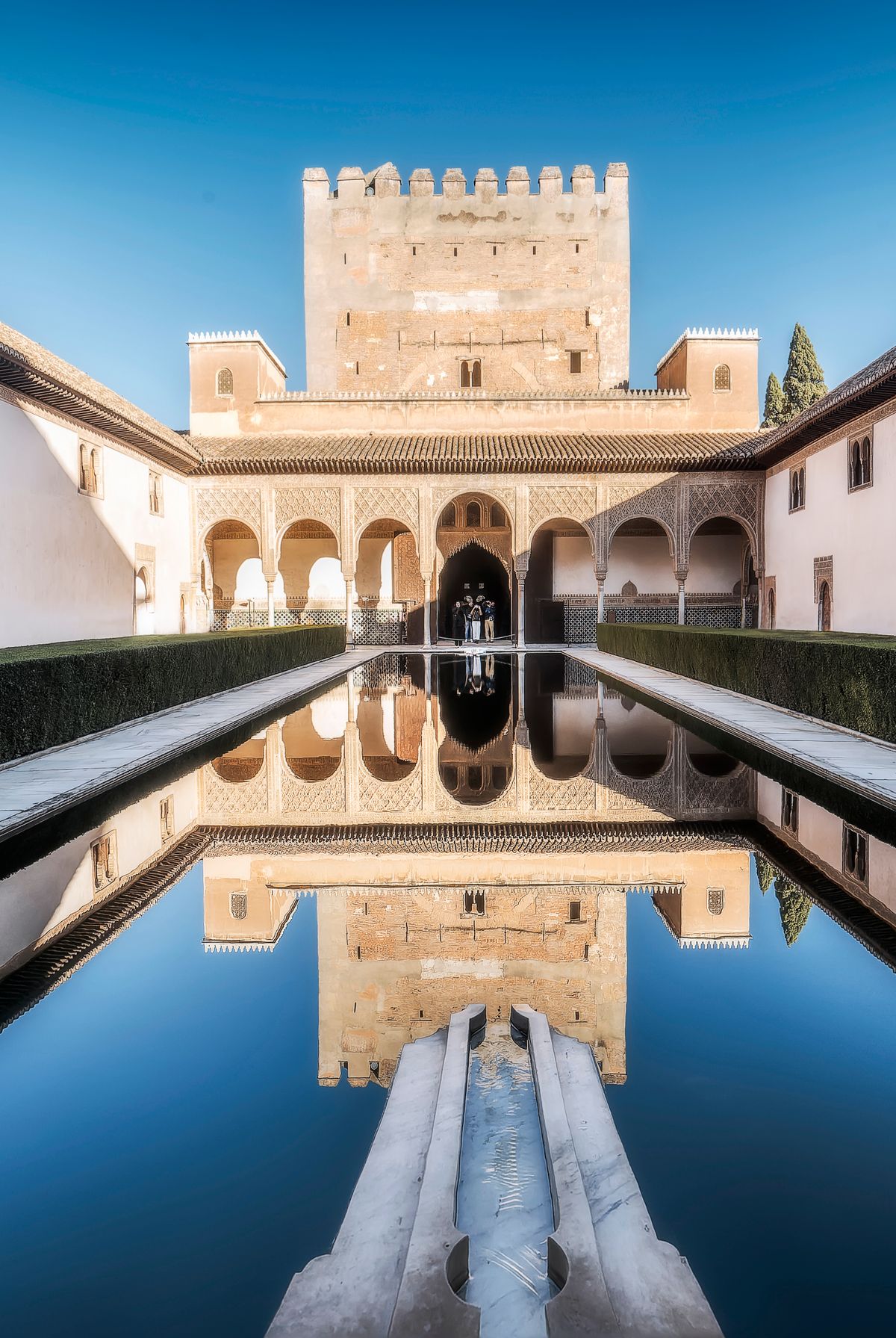
UNESCO’s listing connects the Alhambra, Generalife and Albayzín as complementary parts of historic Granada. Its description identifies the Alhambra as a fortress and residence and the Generalife as a rural residence associated with the rulers of this part of medieval Spain. That wider setting matters. A palace did not stand apart from its surrounding city and landscape, even when walls marked a strong boundary. Start with a map that includes the neighbouring hills and districts. It will help you understand the relationship between courtly spaces and the urban world around them, rather than treating a famous courtyard as the whole of Granada’s royal history.
Water can be practical and symbolic
Channels, pools and fountains make an immediate impression, but their significance should be approached through the site’s interpretation. Ask how water was supplied, which features served practical purposes and how an arrangement contributed to the experience of a court or garden. The answers may overlap. A functional system can also participate in a visual or symbolic design. Avoid replacing research with a single romantic claim about what every sound meant to a ruler. Careful observation is enough to begin: record the relationship between water, light, movement and architecture, then use a reliable guide to establish the historical explanations behind what you noticed.
Decoration is also language
Inscriptions and patterned surfaces can be admired visually while their textual meaning remains unfamiliar. A good cultural visit makes space for both. Seek reliable translations and note where a phrase appears instead of treating all script as a single decorative effect. The same care applies to room names and associations with particular rulers. A familiar modern label may summarize a more complex history. Read it with its explanation. These habits give the royal story specificity: words, spaces and images relate to particular forms of authority and cultural expression, while the surviving monument also records repair, reinterpretation and uses that followed its first construction.
Prepare before choosing a time slot
Use the official operator’s current information for tickets, timed entry, access and the distinction among areas. A UNESCO listing establishes cultural significance but cannot guarantee the logistics of a visit. Plan enough time to read introductory material and avoid arranging an itinerary around only one famous photograph. For further study, pair a history of medieval Granada with a conservation or architectural account of the site. Keep successive periods clear, including later interventions, so the palace does not become frozen in an imagined single moment. The Alhambra’s royal history is compelling precisely because it asks visitors to connect beauty with language, infrastructure and a city’s layered past, making careful looking part of the pleasure.
A short vocabulary list prepared beforehand can improve a visit. Record the terms used by the official interpretation for palace, court and garden, and retain their specific meanings. This avoids flattening every space into a generic “royal room” and helps explain why different parts of the site invite different kinds of attention.
Sources & further reading
Source links support the factual context. Practical examples and suggested workflows are original editorial guidance. Sources checked October 5, 2026.
Spotted something we should correct? Send a correction. Read our editorial policy.