Sukhothai’s royal past: inscriptions, water and a remembered golden age
The former Siamese capital offers a way to distinguish cultural memory from the evidence of an early kingdom.
The historical landscape
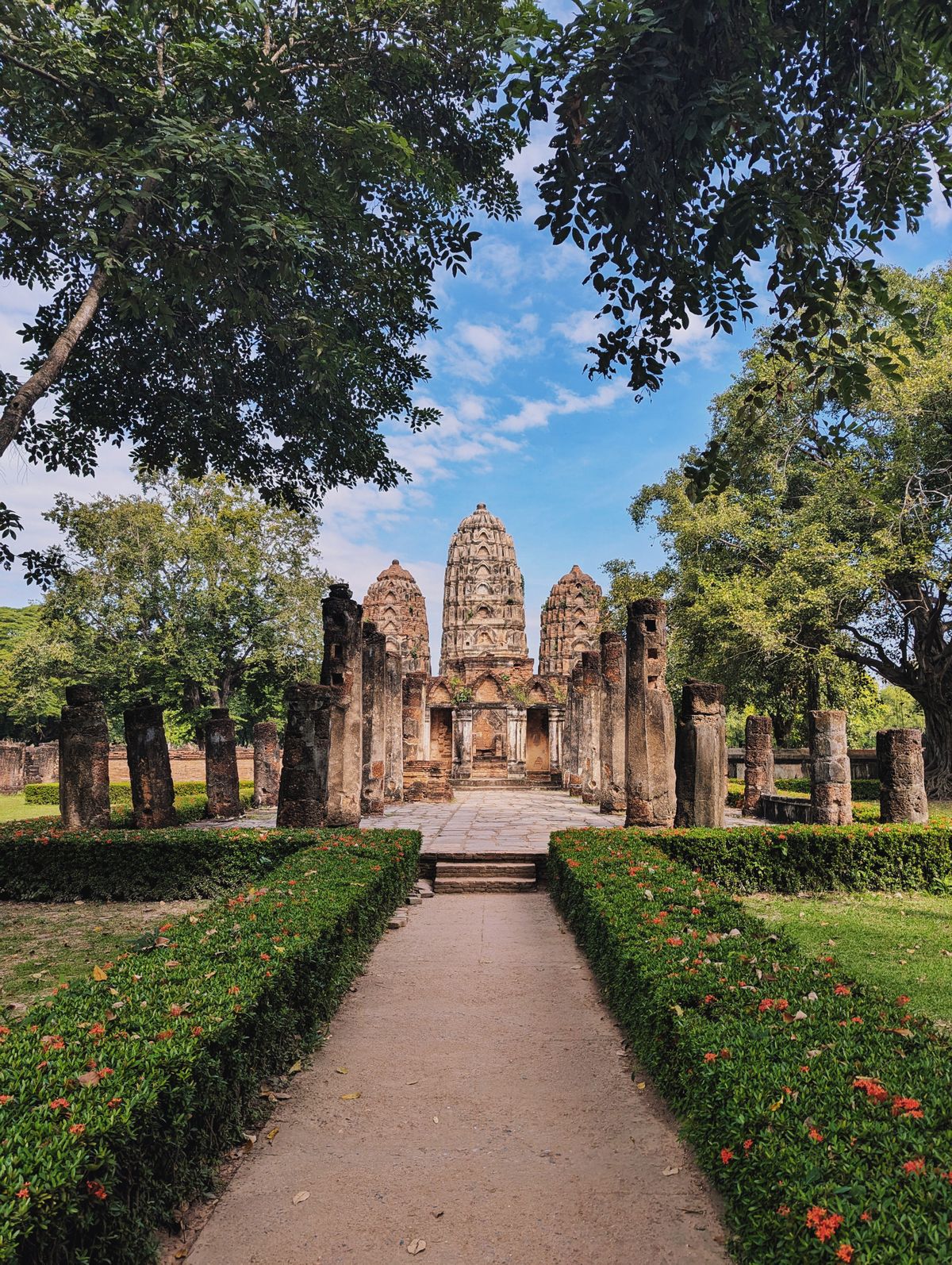
UNESCO describes Sukhothai and its associated towns as evidence of an early Siamese kingdom, highlighting architecture, inscriptions, sculpture and water management. Its account also records the importance of King Ramkhamhaeng in national memory. These elements offer several routes into royal history, but they should not be collapsed into one uncomplicated legend. A remembered golden age is itself an interesting cultural subject; an inscription is a particular historical source; a reservoir is material evidence. Each calls for a different kind of reading. Keeping those categories visible allows readers to appreciate the kingdom’s significance while examining how later generations have understood and represented its achievements.
Inscriptions make claims as well as records
When a royal inscription describes prosperity or good government, ask who is speaking and what kind of authority the text seeks to establish. That does not mean discarding the inscription. It means reading its praise as part of its function. A translation, archaeological context and scholarly commentary can help identify what the words support and what remains uncertain. Avoid turning a memorable description into a complete statistical portrait of everyone’s life. The inscription may illuminate ideals of rule, language and social relationships even where independent verification is difficult. Its value increases when the reader sees both its information and its persuasive form.
Engineering widens the royal story
Water structures connect the kingdom’s monumental culture with everyday needs. They invite readers to think about cultivation, supply, transport and the work involved in making a town function. The heritage account supplies a starting point for those questions. A broader study can ask how engineering related to the landscape and to political organization. Do not assign all technical knowledge to a king simply because the project belongs to his reign. Specialists, workers and communities have histories too. A royal narrative that includes their contribution becomes more explanatory: it shows how authority depends on coordinated activity rather than on a ruler’s vision acting by itself.
See more than a single celebrated capital
The UNESCO property links Sukhothai with associated historic towns, which is a useful reminder that a kingdom had more than one centre of activity. Compare the places through maps and interpretation before deciding which to visit. Current local information should establish access, transport and available guides; the heritage listing explains significance rather than travel logistics. Choose one theme, perhaps writing or water, and follow it through the available material. For further reading, place the royal account beside histories of regional exchange and cultural development. Sukhothai’s story then becomes both a particular early kingdom and a continuing source of Thai historical identity, with evidence and remembrance enriching one another when kept carefully distinct.
When reading about a golden age, note whether the phrase describes a later reputation or a specific historical assessment. That distinction need not diminish cultural pride. It simply allows the reader to explore how memory is formed, how it changes and which surviving objects or texts different generations select to support it.
Sources & further reading
Source links support the factual context. Practical examples and suggested workflows are original editorial guidance. Sources checked October 5, 2026.
Spotted something we should correct? Send a correction. Read our editorial policy.