Cyrus and the cylinder: learning to question a king’s own story
A small clay object opens a large conversation about conquest, legitimacy and modern historical labels.
What the object records
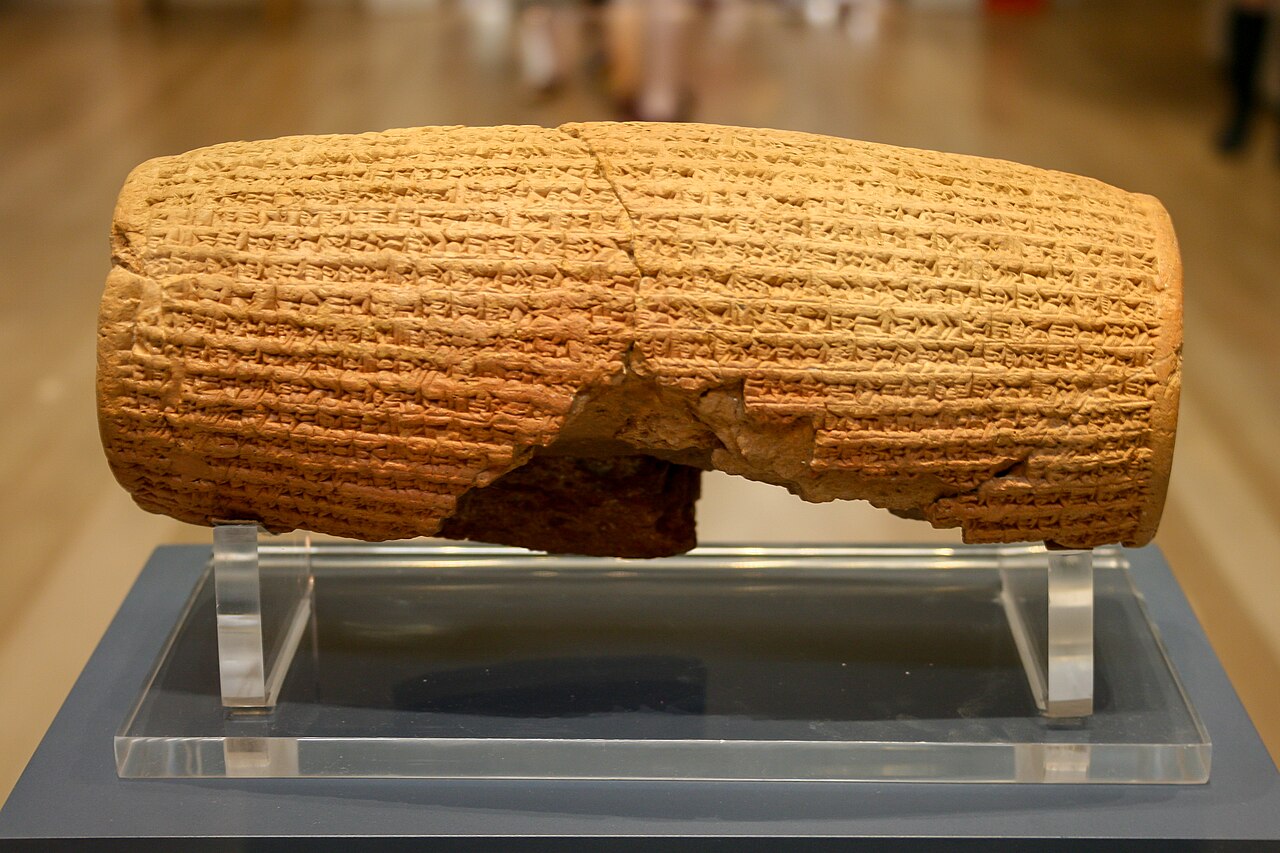
The British Museum identifies the Cyrus Cylinder as a Babylonian account connected with Cyrus’s conquest of Babylon in 539 BCE. The inscription describes restoration of temple images and work at the city, presenting the new ruler within a Babylonian religious framework. Its form belongs to a tradition of foundation inscriptions. Those facts give the object a setting and purpose. They also explain why it must be read critically: a text associated with a king’s victory is not an independent assessment of his government. It tells historians something valuable about the claims made for his rule, but its praise is part of the evidence to interpret rather than a verdict to accept.
An inscription has an audience
Modern museum visitors see the cylinder displayed for close examination. Its ancient function was different, and that change affects how we read it. Ask where the text was intended to be placed, who could understand its language and what conventions its writers used. Such questions connect the object with the institutions that gave it meaning. A royal inscription can speak through familiar religious and political formulas, allowing a new ruler to present himself as a restorer. This is not simply a personal diary in clay. It is a public or ritual claim expressed in a particular cultural vocabulary, which readers should try to understand before applying modern categories.
Avoid letting a modern slogan do the reading
Ancient objects sometimes acquire very broad modern descriptions. When you encounter one, return to the translated text and catalogue discussion. Which protections or actions are actually described? To whom do they apply? What remains unmentioned? These questions help prevent a celebrated label from replacing the historical document. They also keep criticism specific: recognizing a royal text’s persuasive purpose does not make it worthless. It may reveal how legitimacy was negotiated and which acts a conqueror wanted associated with his arrival. Treat modern comparisons as interpretations that require explanation, not as facts contained automatically in an ancient inscription.
Make the object the centre of a small study
Record the museum number, date, material and find context, then choose one claim in the inscription to investigate through a reliable history of the period. Read the account of the defeated ruler with particular care, since a successor has reasons to criticize the preceding regime. If visiting a museum, confirm current display information and look at neighbouring objects for context rather than stopping at the famous name. If reading online, distinguish the catalogue’s description from its discussion of interpretation. Cyrus’s story becomes more substantial when the object is understood as an argument about kingship, and the reader becomes a participant in historical inquiry rather than a collector of flattering quotations.
Compare the museum description with a modern popular account and underline the verbs each uses. “Records,” “claims” and “proves” do different work. The comparison shows how a change in wording can enlarge a conclusion beyond the surviving evidence, an especially useful lesson when a royal object acquires international symbolic importance.
Sources & further reading
Source links support the factual context. Practical examples and suggested workflows are original editorial guidance. Sources checked October 5, 2026.
Spotted something we should correct? Send a correction. Read our editorial policy.